Question:
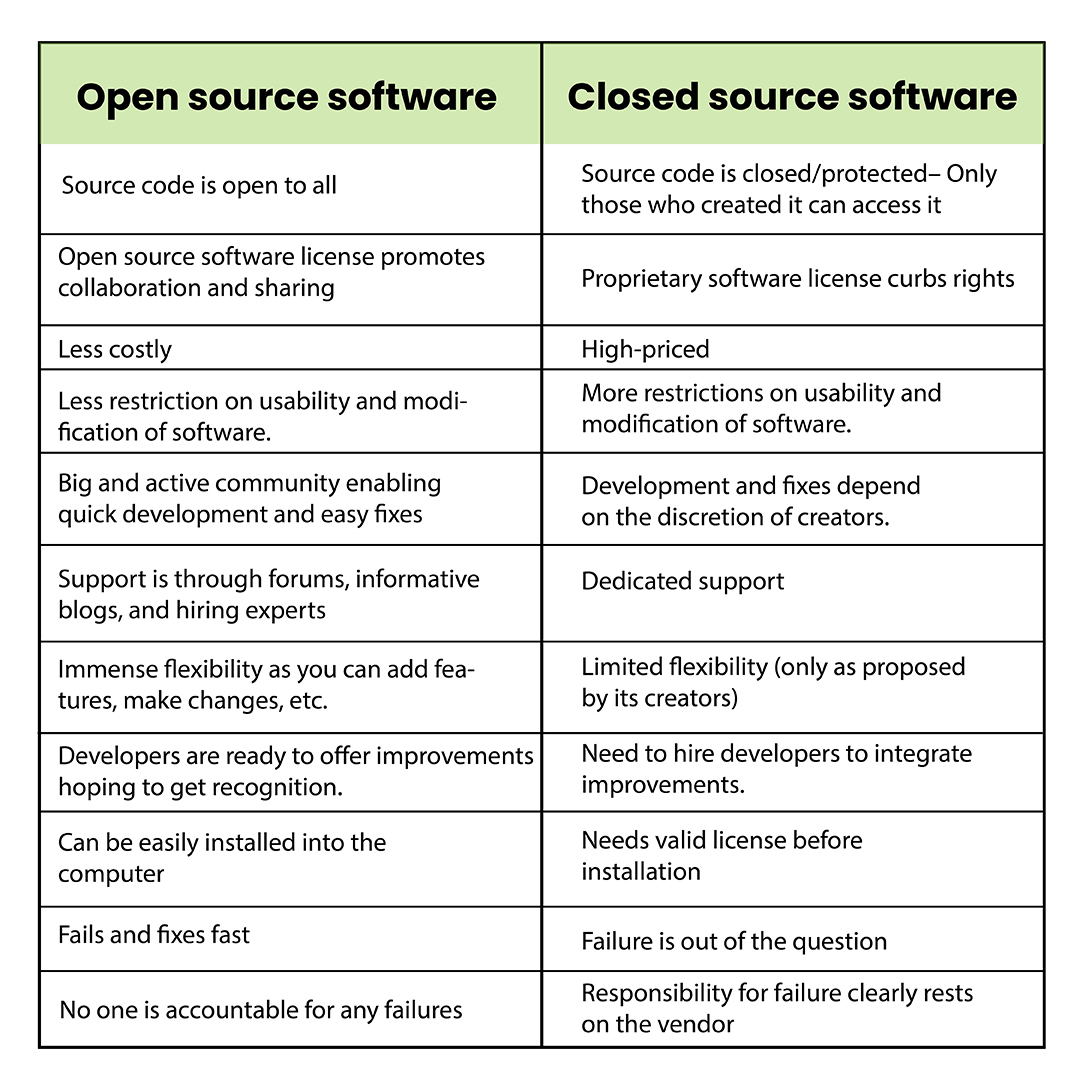
- What is meant by open source software?
- Discuss the open source development model.
- Enlist the features, advantages, and disadvantages of the open-source model.
- Write a note on licensing of open source software.
Answer:
1. Open Source Software (OSS)
- Definition: Software released under a license allowing users to use, modify, and distribute it freely.
- Access: Source code is openly available for inspection and modification.
- Community: Encourages collaborative development and transparency.
2. Open Source Development Model
- Transparency: Source code is openly accessible, fostering transparency and peer review.
- Collaboration: Developers worldwide can contribute to the software’s enhancement.
- Community Involvement: Users and developers form communities to support and improve the software.
3. Features, Advantages, and Disadvantages of Open Source Software
Features:
- Access to source code for transparency and customization.
- Freedom to modify and distribute software.
- Community-driven development and support.
- Enhanced security through public scrutiny.
Advantages:
- Cost-effective, often free of charge.
- Flexibility and customization options.
- Rapid bug fixing and feature enhancements.
- Enhanced security due to community scrutiny.
Disadvantages:
- Lack of formal support channels.
- Potential for fragmented development efforts.
- Compatibility challenges with proprietary software.
- Security risks if updates are not managed effectively.
4. Licensing of Open Source Software
- Types of Licenses: Permissive (e.g., MIT, BSD) and Copyleft (e.g., GPL) licenses.
- Permissive Licenses: Allow broad use, modification, and distribution with minimal restrictions.
- Copyleft Licenses: Require derivative works to be licensed under the same terms, preserving openness.
- License Compliance: Users must adhere to license terms, including attribution and distribution of source code.